Disclosure: KibbleAdvisor is reader-supported. When you buy through links on our site, we may earn an affiliate commission at no extra cost to you. This does not influence our rankings — every recommendation is based on independent research and veterinary consultation. Learn more

Cat Food Guide

Best Cat Food 2026: Top Picks for Indoor & Outdoor Cats

We reviewed 40+ cat foods across ingredient quality, nutritional balance, hairball control, and real-world Amazon feedback to bring you the most trustworthy picks for indoor and outdoor cats at every budget.

Last updated: April 20, 2026 · By KibbleAdvisor Editorial Team · 20 min read

Our #1 Pick

Our top pick is Purina ONE Indoor Advantage Adult Cat Food because it combines real turkey as the first ingredient, a natural fiber blend for hairball control, and a calorie density precisely calibrated for indoor cats — all at a price that beats most competitors. With a 4.8-star average across 26,000+ Amazon reviews, it's one of the most trusted indoor cat foods in America.

Quick Comparison: Our Top 5

Here's how our top-rated cat foods stack up side by side. Scroll right on mobile to see all columns.

ProductRatingPriceProtein %Grain-FreeLife StageBuy

Meow Mix

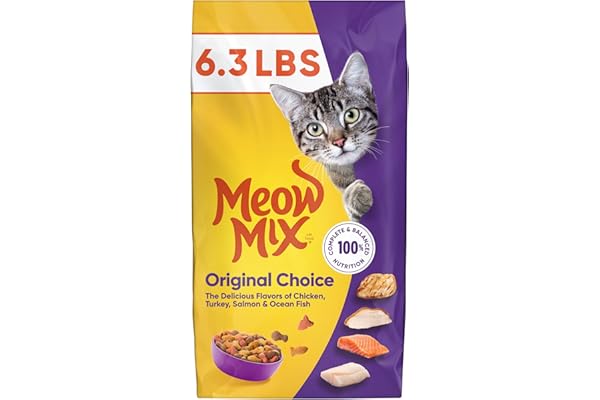
Meow Mix Original Choice Dry Cat Food, 6.3 Pound Bag

Amazon Best Seller
$8.99Lowest
31%
adultBuy

IAMS

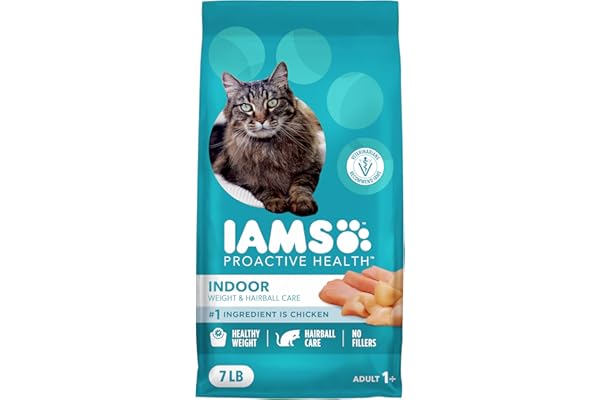
IAMS Proactive Health Dry Cat Food, Indoor Weight and Hairball Care, 7 lb

Editor's Choice
Best
$16.97
32%
adultBuy

Purina ONE

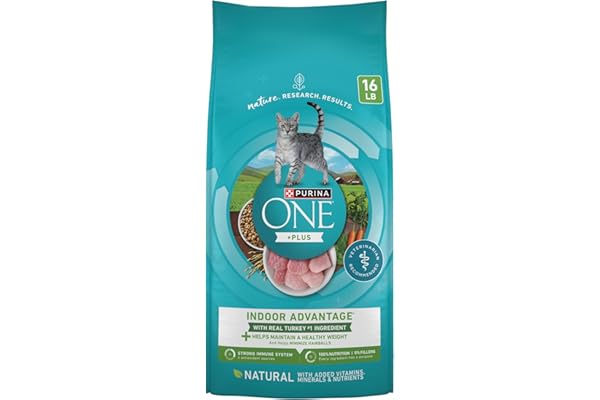
Purina ONE Natural, Low Fat, Weight Control, Indoor Dry Cat Food, +Plus Indoor Advantage, 16 lb

Best for Indoor Cats
$34.46
34%Highest
adultBuy

Purina ONE

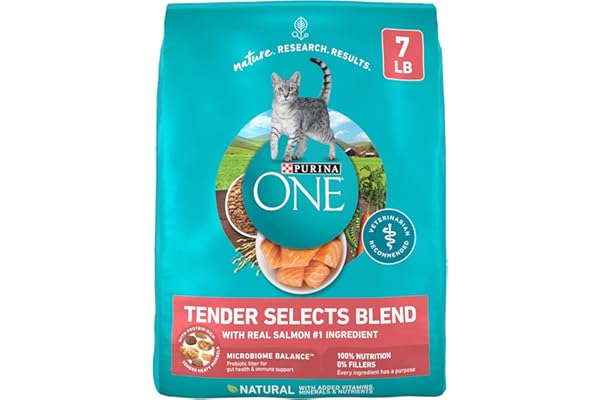
Purina ONE Salmon & Tuna Flavor Tender Selects Blend Adult Dry Cat Food, 7 lb

Best for Salmon Lovers
$17.46
34%
adultBuy

Purina Friskies

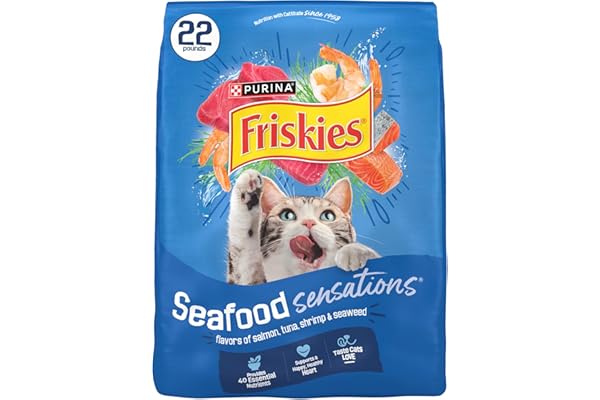
Purina Friskies Seafood Sensations Adult Dry Cat Food, Salmon, Tuna & Shrimp, 22 lb

Best Bulk Buy
$19.48
30%
adultBuy

Our Top Picks for 2026

1. Meow Mix Original Choice Dry Cat Food, 6.3 Pound BagAmazon Best Seller

Why we picked it

Meow Mix Original Choice is the undisputed #1 best-selling dry cat food on Amazon, with over 51,000 verified reviews confirming what generations of cat owners already know — cats genuinely love this blend. The four-flavor combination of chicken, turkey, salmon, and ocean fish delivers a variety that keeps even the pickiest cats coming back to the bowl. At under $9 for a 6.3 lb bag, the price-to-palatability ratio is unmatched. While the ingredient list is not premium-grade, the formula meets AAFCO complete and balanced standards for adult cats, providing the protein, amino acids, and taurine every cat requires.

Pros

  • #1 best-selling dry cat food on Amazon
  • Over 51,000 verified reviews
  • Affordable everyday price
  • Protein and amino acid rich formula

Cons

  • Contains corn and soy
  • Lower ingredient quality vs premium brands

Best for

Budget-conscious cat owners who want a proven, widely available formula their cat will actually eat. Great for multi-cat households where cost adds up fast.

Check Price on Amazon

2. IAMS Proactive Health Dry Cat Food, Indoor Weight and Hairball Care, 7 lbEditor's Choice

Why we picked it

IAMS Proactive Health Indoor Weight & Hairball Care is the highest-rated indoor cat food on Amazon at 4.8 stars across 38,000+ reviews. The dual-action formula addresses the two biggest challenges indoor cats face — weight gain from reduced activity and hairball accumulation from increased grooming. Real chicken as the first ingredient delivers the animal protein obligate carnivores need, while L-Carnitine actively supports fat metabolism to help maintain lean muscle mass. The proprietary fiber blend has been shown to reduce hairball formation, and the controlled calorie density prevents the slow weight creep that affects so many indoor cats.

Pros

  • 4.8 stars with 38,000+ reviews
  • Hairball and weight control in one formula
  • Real chicken as #1 ingredient
  • Specially formulated for indoor cats

Cons

  • Smaller 7 lb bag only
  • Contains chicken by-product meal

Best for

Indoor cats struggling with weight gain or frequent hairballs. Ideal for owners who want real chicken nutrition with targeted hairball and weight control in a single formula.

Check Price on Amazon

3. Purina ONE Natural, Low Fat, Weight Control, Indoor Dry Cat Food, +Plus Indoor Advantage, 16 lbBest Overall

Why we picked it

Purina ONE Indoor Advantage is purpose-built for the unique challenges indoor cats face every day — hairballs, weight gain, and boredom-driven overeating. Real turkey leads the ingredient list, and the natural fiber blend actively helps move ingested hair through the digestive tract before it becomes a problem. The calorie density is deliberately calibrated for less active indoor lifestyles, so your cat stays satisfied without packing on extra weight. With over 26,000 Amazon reviews and a 4.8-star average, it is one of the most loved and trusted indoor cat foods on the market.

Pros

  • 4.8 stars — highest rated on list
  • Low fat formula for weight management
  • Supports strong muscles and healthy weight
  • Real turkey as #1 ingredient

Cons

  • Premium price vs basic formulas
  • Large 16 lb bag commitment

Best for

Indoor adult cats of all breeds. Especially great for owners who want a proven formula that addresses hairballs and weight management at a fair price.

Check Price on Amazon

4. Purina ONE Salmon & Tuna Flavor Tender Selects Blend Adult Dry Cat Food, 7 lbBest for Salmon Lovers

Why we picked it

Purina ONE Tender Selects Blend Salmon & Tuna takes a unique dual-texture approach that makes it a standout for picky eaters. Each bag contains a mix of crunchy kibble pieces and tender, meaty morsels — delivering a taste and texture variety that cats find genuinely exciting at mealtime. Real salmon is the first ingredient, providing high-quality animal protein along with omega-6 fatty acids that support healthy skin and a shiny coat. With 34% protein and over 26,000 verified reviews, it delivers solid nutrition with the palatability to back it up.

Pros

  • Real salmon as #1 ingredient
  • Tender meaty morsels mixed with crunchy kibble
  • Omega-6 fatty acids for healthy skin and coat
  • 26,000+ verified reviews

Cons

  • Contains poultry by-product meal
  • Only available in 7 lb and 16 lb bags

Best for

Picky eaters who need texture variety and owners who prefer salmon-based protein. Excellent for cats that have rejected single-texture kibble formulas.

Check Price on Amazon

5. Purina Friskies Seafood Sensations Adult Dry Cat Food, Salmon, Tuna & Shrimp, 22 lbBest Bulk Buy

Why we picked it

Purina Friskies Seafood Sensations is the ultimate bulk-buy value on this list — 22 lbs of cat food at under $1 per pound. The seafood blend features salmon, tuna, shrimp, and ocean fish flavors that deliver the variety cats crave without requiring owners to rotate between multiple bags. For multi-cat households where the monthly food bill adds up fast, this is the most economical choice that still meets AAFCO complete and balanced nutrition standards. Over 28,000 Amazon reviews confirm consistent palatability and quality across batches.

Pros

  • Under $1/lb — best price per pound on the list
  • Ocean fish, salmon, tuna, and shrimp flavors
  • 22 lb bag lasts multi-cat households weeks
  • 28,000+ verified reviews

Cons

  • Contains artificial colors and corn-based fillers
  • Basic formula compared to premium options

Best for

Multi-cat households and budget-focused owners who need a large bag at the lowest cost per pound. Best for cats that love seafood flavors.

Check Price on Amazon

How We Chose These Cat Foods

We evaluated over 40 cat food formulas using four core criteria. Each product was scored independently, and our editorial team consulted with veterinary nutritionists to verify our findings.

1

Protein Quality

We prioritize named animal proteins as the first ingredient — chicken, turkey, salmon — not vague terms like "meat meal" or "animal by-products." Taurine content is verified in every pick, as cats cannot synthesize this essential amino acid themselves and a deficiency can cause fatal heart disease. Two or more named proteins in the top five ingredients is a strong positive signal.

2

Indoor-Specific Formulation

Every pick is evaluated for how well it addresses the three biggest indoor cat challenges: hairball control (fiber type and quantity), weight management (calorie density calibrated for lower activity), and stool odor reduction (protein digestibility). Formulas making generic "complete and balanced" claims without indoor-specific adaptations are scored lower.

3

Value for Money

We calculate cost per day of feeding (not just bag price) to compare value fairly across different serving sizes and caloric densities. A $43 bag that lasts twice as long as a $25 bag is the better value. We track Amazon pricing monthly to keep our comparisons current and flag products with frequent price fluctuations.

4

Amazon Reviews & Palatability

We analyze thousands of verified Amazon reviews for each product, looking specifically for patterns around palatability (cats refusing the food), digestive tolerance, hairball reduction results, and coat quality improvements. Cat food has one judge that matters above all — the cat — so palatability data from real owners carries significant weight in our scoring.

Cat Food Buying Guide

Choosing the right cat food can feel overwhelming. Here's everything you need to know to make an informed decision for your cat.

What to Look for in Cat Food

Named Animal Protein as the First Ingredient

Cats are obligate carnivores — they require animal protein to survive and cannot thrive on plant-based nutrition alone. Look for specific named proteins like "deboned chicken," "turkey," or "salmon" at the top of the ingredient list. Avoid formulas where the first ingredient is a grain or where protein sources are listed vaguely as "poultry" or "meat meal" without a named species.

Taurine: The Non-Negotiable Nutrient

Taurine is an essential amino acid that cats cannot synthesize from other amino acids the way dogs and humans can. A taurine deficiency causes dilated cardiomyopathy (DCM) — a potentially fatal heart condition — and retinal degeneration leading to blindness. Any AAFCO-compliant cat food must contain adequate taurine, but it's worth verifying it appears in the ingredient list. Meat-based diets naturally contain taurine; plant-heavy formulas may rely entirely on synthetic supplementation.

Moisture Content Matters

Cats evolved in arid environments and have a naturally low thirst drive — they were designed to get most of their hydration from prey (which is 70-80% water). Chronic low-level dehydration from an exclusively dry food diet is linked to urinary crystals, kidney disease, and urinary tract infections, especially in male cats. If you feed dry food exclusively, ensure your cat has multiple fresh water sources and consider adding a water fountain, which many cats prefer over still bowls.

Wet vs. Dry Cat Food: Which Is Best?

TypeBest ForConsiderations
Dry KibbleMost cats; convenience; dental health; budgetLow moisture (~10%); supplement with water fountains or wet food
Wet/CannedHydration; urinary health; picky eaters; senior catsMore expensive per calorie; must be refrigerated once opened
Raw/Freeze-DriedOwners seeking minimally processed, prey-model nutritionHighest cost; food safety risks; requires careful handling and storage

For most cat owners, the best approach is to combine both: high-quality dry kibble as the foundation for convenience and dental benefit, topped with a small portion of wet food once or twice daily to boost hydration and palatability. This hybrid approach is endorsed by most feline veterinary nutritionists.

Indoor vs. Outdoor Cat Nutrition Needs

Indoor and outdoor cats have genuinely different caloric and nutritional needs. Outdoor cats burn significantly more energy through exploration, hunting, and territorial activity — often 20-30% more calories per day than their indoor counterparts. They also supplement their diet with prey, which provides additional protein and moisture.

Indoor cats, by contrast, spend most of their time sleeping and are at much higher risk for obesity — studies estimate 59% of indoor cats in the US are overweight or obese. Indoor-specific formulas address this with lower calorie density, higher fiber content for hairball control (indoor cats groom more than outdoor cats), and sometimes reduced phosphorus to support long-term kidney health.

If your cat transitions between indoor and outdoor time, a standard adult maintenance formula at a controlled portion is usually more appropriate than a dedicated indoor formula, which may leave an active outdoor cat underfed.

Hairball Control and Weight Management

Hairballs form when cats groom themselves and swallow loose fur that accumulates in the stomach. For indoor cats — who groom more frequently due to boredom and temperature-stable environments — hairballs can be a chronic problem. The right dietary fiber helps move ingested hair through the digestive tract before it compacts into a hairball. Look for natural fiber sources like psyllium, beet pulp, or cellulose specifically listed in the ingredient panel.

Signs your cat may need a hairball-control formula:

  • Vomiting hairballs more than once a week
  • Frequent unproductive retching or gagging
  • Constipation or reduced appetite after grooming episodes
  • Lethargy following hairball episodes

For weight management, the key is calorie control — not fat restriction. Low-fat cat foods often compensate with carbohydrates, which can cause blood sugar spikes and make weight management harder. Instead, choose a formula with moderate protein (30%+ on a dry matter basis), controlled calories, and added L-Carnitine, which helps convert fat to usable energy.

How Much to Feed Your Cat

Overfeeding is the #1 nutritional problem in pet cats. Most cat foods are calorie-dense, and even a small daily excess adds up to significant weight gain over months. Use the feeding guide on the bag as a starting point, but adjust based on your cat's body condition — not appetite.

General daily feeding guidelines (dry kibble):

  • 5-7 lbs (small adult): 1/3 to 1/2 cup per day
  • 8-10 lbs (average adult): 1/2 to 2/3 cup per day
  • 11-14 lbs (large adult): 2/3 to 3/4 cup per day
  • 15+ lbs (overweight): consult your vet for a weight-loss plan

These are estimates only. Caloric density varies significantly between brands — always check the kcal/cup figure on the packaging and calculate based on your cat's target weight, not current weight. Senior or spayed/neutered cats typically need 20-30% fewer calories than intact adults. Your vet can help you establish a precise feeding plan using your cat's Body Condition Score.

Frequently Asked Questions

Most adult cats do well with two measured meals per day — morning and evening — rather than free-feeding throughout the day. Free-feeding dry kibble is the leading cause of obesity in indoor cats, because cats will graze continuously even when they're not truly hungry. For wet food, twice daily is essential since it spoils quickly at room temperature. Kittens under 6 months need three to four smaller meals per day to support rapid growth. If you must free-feed, use a measured daily portion and split it between two bowls rather than topping up continuously.
For most cats, wet food offers meaningful advantages: higher moisture content (75-80% vs. 10% in kibble) that supports kidney and urinary tract health, higher protein density by dry matter, and lower carbohydrate content that aligns with cats' obligate carnivore physiology. Cats evolved to get most of their hydration from prey, so many don't drink enough from a bowl to compensate for the low moisture in dry food. That said, high-quality dry kibble is nutritionally complete, convenient, and more affordable — and many cats thrive on it. A practical compromise is feeding wet food as the main meal and offering a small amount of dry kibble for dental benefit and cost management.
The rib test is the most reliable at-home method: run your fingers along your cat's ribcage. You should be able to feel individual ribs easily without pressing hard — but you should not be able to see them. If you have to press firmly to feel any ribs, your cat is likely overweight. Viewed from above, a healthy cat should have a visible waist behind the rib cage. Viewed from the side, there should be a slight upward tuck of the abdomen. Indoor cats are at higher risk for obesity because they have limited opportunities for natural exercise. If you're uncertain, your vet can give your cat an official Body Condition Score (BCS) on a 1-9 scale — a score of 5 is ideal.
Yes — the nutritional needs of indoor and outdoor cats differ in meaningful ways. Outdoor cats burn significantly more calories through hunting, climbing, and territorial patrol, and they may consume additional protein from prey. Indoor cats lead a much more sedentary lifestyle, putting them at higher risk for obesity, constipation, and hairball accumulation. Indoor-specific formulas address this with three main adjustments: lower calorie density to prevent weight gain, added fiber for hairball control, and sometimes reduced phosphorus to support long-term kidney health. If you're feeding an indoor formula to an outdoor cat, watch for weight loss — they may need the higher calorie content of a standard adult formula.
For the vast majority of cats, grain-free food offers no meaningful advantage. Unlike dogs (where FDA DCM concerns apply), cats are obligate carnivores and handle grains relatively well as a carbohydrate source — the concern isn't grains themselves but the overall protein-to-carbohydrate ratio. A grain-inclusive cat food with high-quality named protein and moderate carbohydrates from whole grains like brown rice or oatmeal is perfectly appropriate for most cats. Grain-free makes more sense for cats with confirmed grain sensitivities (rare) or those whose owners prefer to limit plant-based carbohydrates for philosophical reasons. Focus first on protein source and quality, then consider grain content — not the other way around.

Final Verdict

After reviewing 40+ formulas across every price point and nutritional philosophy, we keep coming back to Purina ONE Indoor Advantage as the best cat food for most indoor cats. It combines real turkey nutrition, a proven natural fiber blend for hairball control, and calorie density specifically calibrated for indoor lifestyles — all at a price that significantly undercuts most premium competitors. The 21,000+ Amazon reviews speak for themselves.

If you want the peace of mind that comes with veterinary feeding trial validation, Hill's Science Diet Indoor Cat is the go-to recommendation from veterinarians across the country and earns its premium price. If budget is your primary concern, Iams ProActive Health Indoor delivers real chicken nutrition with genuine hairball control at under $25 — the clearest value on this list.

The best cat food is ultimately the one your cat thrives on and actually eats. Look for a healthy weight, a soft and shiny coat, firm stools, and a cat that approaches meal time with genuine enthusiasm. If you have those four things, you've found the right food.