Disclosure: KibbleAdvisor is reader-supported. When you buy through links on our site, we may earn an affiliate commission at no extra cost to you. This does not influence our rankings — every recommendation is based on independent research and veterinary consultation. Learn more

Grain-Free Dog Food Guide

Best Grain-Free Dog Food 2026: Safe Picks Reviewed

We reviewed the grain-free market with the FDA DCM investigation in mind — ranking formulas not just on protein quality and palatability, but on ingredient safety profiles and taurine considerations. Here are the picks we actually stand behind.

Last updated: April 20, 2026 · By KibbleAdvisor Editorial Team · 23 min read

Our #1 Pick

Our top pick is Wellness CORE Grain-Free Original Turkey & Chicken because it delivers 34% protein from named animal proteins, keeps legume content at moderate levels relative to competitors, and includes probiotics, omega fatty acids, glucosamine, and chondroitin in a single formula. It threads the needle between high-protein grain-free nutrition and the ingredient safety considerations raised by the FDA DCM investigation — making it the most broadly recommendable grain-free formula for healthy adult dogs.

Quick Comparison: Our Top Picks

Here's how our top-rated grain-free dog foods stack up side by side. Scroll right on mobile to see all columns.

ProductRatingPriceProtein %Grain-FreeLife StageBuy

Taste of the Wild

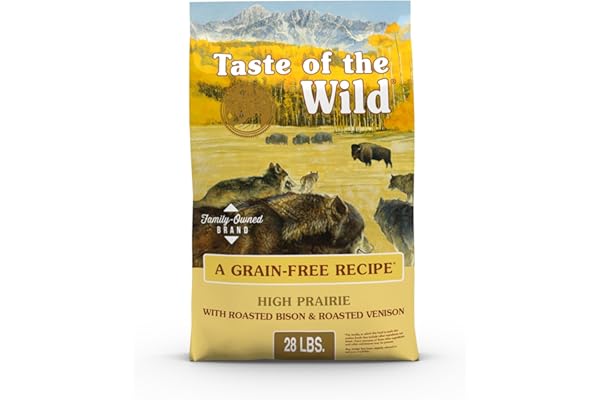
Taste of the Wild High Prairie Grain-Free Recipe with Roasted Bison and Venison, 28 lb

Best Grain-Free
Best
$58.99
32%
adultBuy

Stella & Chewy's

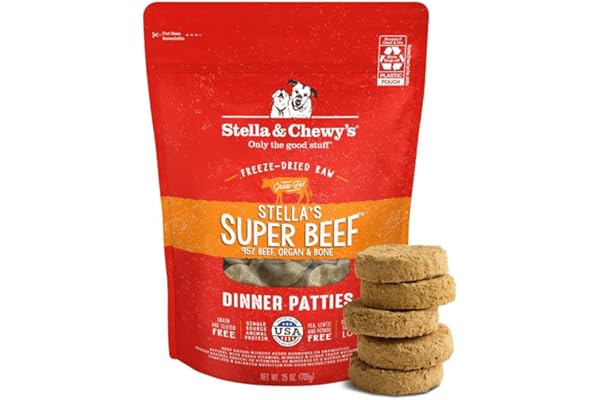
Stella & Chewy's Freeze-Dried Raw Dog Food, Beef Patties, Grain-Free, 25 oz

Premium Raw Pick
$56Lowest
42%Highest
adultBuy

Our Top Grain-Free Picks for 2026

1. Taste of the Wild High Prairie Grain-Free Recipe with Roasted Bison and Venison, 28 lbTop Pick

Why we picked it

Pros

  • Roasted bison & venison as primary proteins
  • Grain-free with sweet potatoes & peas
  • Probiotics and antioxidants included
  • Great value for grain-free

Cons

  • FDA DCM investigation (inconclusive)
  • Some dogs need slow transition

Best for

Check Price on Amazon

2. Stella & Chewy's Freeze-Dried Raw Dog Food, Beef Patties, Grain-Free, 25 ozTop Pick

Why we picked it

Pros

  • Complete raw diet in convenient patties
  • 95%+ animal ingredients
  • No grain, gluten, fillers
  • High protein for active dogs

Cons

  • Very expensive per pound
  • Requires proper storage

Best for

Check Price on Amazon

How We Chose These Grain-Free Dog Foods

Evaluating grain-free dog food requires an additional layer of scrutiny beyond standard ingredient and nutritional analysis. We applied four core criteria, weighted with the FDA DCM investigation context in mind.

1

Protein Quality & Source

We require a named animal protein as the first ingredient — "deboned chicken," "turkey," or "salmon," not "meat meal" or "poultry by-product." Multiple named protein sources in the top five ingredients is a strong positive signal. We also evaluated the overall animal-to-plant protein ratio, favoring formulas where the protein stack is predominantly animal-derived.

2

Carbohydrate Composition

Given the FDA investigation's focus on legume-heavy formulas, we specifically evaluated whether peas, lentils, chickpeas, or legume seeds dominated the carbohydrate sources. Formulas where sweet potato, potato, or whole vegetables are the primary carbohydrate received higher marks. We did not penalize all legume inclusion — moderate use is common and likely benign — but heavy legume loading as the primary filler was a flag.

3

Nutritional Completeness

Every pick on this list carries an AAFCO complete and balanced statement for adult dogs. We additionally checked for taurine supplementation or manufacturer confirmation of adequate taurine levels in their formulas, given the DCM-taurine hypothesis. Brands that have conducted third-party taurine analysis received additional credit. Feeding trial substantiation (vs. formulation-only) was a positive differentiator.

4

Value & Amazon Reviews

We calculate cost per day of feeding across different dog sizes to compare value accurately. A $75 bag with a high caloric density may cost less per day than a $55 bag with low density. Amazon review analysis covered palatability, digestive tolerance, coat quality, and batch consistency. Products with recurring quality control complaints were removed from consideration.

Grain-Free Dog Food Buying Guide

Grain-free is one of the most marketed — and most misunderstood — categories in dog food. Here's what the science and the ingredient labels actually tell us.

Who Actually Benefits from Grain-Free Dog Food

Grain-free dog food is genuinely beneficial for a specific subset of dogs — those with confirmed grain allergies or intolerances. However, this group is smaller than marketing suggests. True grain allergies account for a minority of food sensitivities in dogs; the most common food allergens are animal proteins (beef, chicken, dairy, and eggs), not grains.

Grain-free may genuinely help if your dog has:

  • A confirmed grain allergy diagnosed through a veterinary elimination diet trial
  • Celiac disease or confirmed gluten intolerance (rare in dogs but documented)
  • Chronic digestive issues that resolved only after removing grains from the diet
  • A veterinarian recommendation for grain-free based on their specific health history

For the majority of healthy dogs without a diagnosed grain sensitivity, a high-quality grain-inclusive diet with whole grains like oatmeal, brown rice, or barley is nutritionally equivalent to — and carries fewer theoretical risks than — a grain-free alternative. The decision to go grain-free should be driven by your dog's individual needs, not general marketing claims.

Grain-Free vs. Grain-Inclusive: Nutritional Comparison

FactorGrain-FreeGrain-Inclusive
Typical protein %30–38% (often higher)22–30% (varies widely)
Carbohydrate sourceLegumes, potatoes, sweet potatoesRice, oatmeal, barley, corn
DCM associationUnder investigation (no confirmed link)No association identified
DigestibilityHigh (when well-formulated)High (whole grains digest well in dogs)
Typical costHigher (fewer commodity ingredients)Lower to moderate

What Replaces Grains in Grain-Free Food

Grains serve primarily as carbohydrate sources and binders in dry kibble. When removed, manufacturers substitute one of three main alternatives — each with different nutritional and safety profiles:

Legumes (Peas, Lentils, Chickpeas)

The most common grain substitute in grain-free kibble. Legumes are high in plant-based protein and fiber, which can inflate the crude protein percentage without adding animal-derived amino acids. Heavy legume loading was the primary concern in the FDA DCM investigation — formulas where peas or lentils appear multiple times in the first five ingredients warrant extra caution, particularly for DCM-predisposed breeds.

Potatoes and Sweet Potatoes

A lower-risk alternative to legumes. Potatoes and sweet potatoes are starchy carbohydrates that dogs digest effectively and that were not specifically implicated in the FDA investigation to the same degree as legumes. Sweet potato also provides beta-carotene, vitamin C, and dietary fiber. Formulas that use sweet potato as the primary carbohydrate source are generally preferable from a safety standpoint.

Fruits and Vegetables (Pumpkin, Squash, Berries)

Premium grain-free formulas increasingly use a diverse mix of fruits and vegetables — pumpkin, butternut squash, blueberries, cranberries — as supplemental carbohydrate and micronutrient sources. These ingredients appear in smaller quantities and serve primarily as nutrient boosters rather than bulk carbohydrate fillers. Their inclusion is a positive signal for formula quality.

The FDA DCM Investigation: What We Know

In July 2018, the FDA's Center for Veterinary Medicine (CVM) announced it was investigating a potential link between certain dog foods and dilated cardiomyopathy (DCM) — a condition in which the heart muscle weakens and the heart enlarges, reducing its ability to pump blood effectively. The announcement followed an unusual cluster of DCM cases in breeds not traditionally predisposed to the condition, with a high proportion of affected dogs eating grain-free diets.

The FDA released multiple updates between 2018 and 2020, naming specific brands that appeared frequently in the reported cases — including Taste of the Wild, Merrick, Blue Buffalo, and others. Importantly, the FDA emphasized these were associations, not confirmed causes, and that no recall was issued. The named brands contested the methodology and noted that the number of cases was small relative to the millions of dogs eating those foods.

Key facts the science established:

  • No definitive causal link between grain-free diets and DCM was ever established.
  • The FDA formally closed the active investigation in 2022 without regulatory action.
  • Legume-heavy formulas were the primary concern — the absence of grains alone was not identified as the causative factor.
  • Some affected dogs had low blood taurine levels, suggesting a potential link to taurine synthesis interference — but this was not universal across all cases.
  • Genetics, breed, and individual metabolism likely play significant roles that the diet-only hypothesis does not fully explain.

Our position: The FDA investigation is a legitimate reason for thoughtful formula selection — not blanket avoidance of grain-free food. Choosing formulas with moderate legume content, confirmed AAFCO compliance, and taurine supplementation is a reasonable precaution. For breeds genetically predisposed to DCM — including Golden Retrievers, Doberman Pinschers, Boxers, Great Danes, and Cocker Spaniels — we recommend discussing the grain-free decision with your veterinarian before committing to a grain-free diet long term.

How to Choose a Safe Grain-Free Formula

Check the first five ingredients

Animal protein should lead the list. If peas, lentils, or chickpeas appear two or more times in the first five ingredients — for example, "peas" and "pea protein" listed separately — the formula is legume-heavy. Prefer formulas where sweet potato, potato, or vegetables follow the primary protein sources.

Look for taurine on the supplement panel

Taurine is an amino acid essential for cardiac function. Some grain-free formulas now explicitly add taurine as a supplement — look for it in the "added vitamins and minerals" section of the ingredient panel. Its presence is a positive signal that the manufacturer is aware of the DCM conversation and has responded proactively.

Verify AAFCO compliance and the life stage statement

Every product on our list carries an AAFCO statement for adult maintenance or all life stages. A formula without an AAFCO adequacy statement is not complete and balanced — regardless of how premium the ingredient list looks. Feeding trial substantiation is the gold standard over formulation-only analysis.

Research the brand's recall history

The FDA maintains a public database of pet food recalls. Brands with recent recalls — especially for contamination or mislabeling of ingredients — deserve extra scrutiny. A single historical recall that was promptly addressed is different from a pattern of quality control failures. Check recalls.fda.gov/consumer/search before committing to a new food.

Frequently Asked Questions

For most healthy dogs, a well-formulated grain-free diet is safe. The FDA investigated a potential association between grain-free diets and dilated cardiomyopathy (DCM) from 2018 to 2022, but no definitive causal link was ever established. The investigation was closed without a recall or regulatory action. The primary concern was not the absence of grains per se, but the heavy use of legumes (peas, lentils, chickpeas) as primary carbohydrate sources in some grain-free formulas. Choosing grain-free foods with moderate legume content and confirmed taurine levels reduces any theoretical risk further. If your dog is a breed predisposed to DCM — Golden Retriever, Doberman Pinscher, Boxer, or Great Dane — consult your veterinarian before committing to a grain-free diet long term.
No — dogs do not require grains. Grains are a source of carbohydrates, B vitamins, and fiber, but dogs can obtain all of these nutrients from non-grain sources like sweet potatoes, legumes, and vegetables. Dogs evolved as omnivores and have developed the ability to digest starches effectively (unlike strict carnivores like cats), but there is no grain that provides a nutrient a dog cannot get elsewhere. Whole grains like oatmeal, brown rice, and barley are nutritious and digestible for most dogs, but their absence in a diet does not create a nutritional deficit if the formulator has compensated with appropriate alternatives. The decision to feed grain-free should be based on your dog's individual health needs, not the assumption that grain-free is categorically superior.
In July 2018, the FDA's Center for Veterinary Medicine (CVM) announced it was investigating a potential link between certain dog foods and dilated cardiomyopathy (DCM) — a condition in which the heart muscle weakens and the heart enlarges, reducing its ability to pump blood effectively. The announcement followed an unusual cluster of DCM cases in breeds not traditionally predisposed to the condition, with a high proportion of affected dogs eating grain-free diets. The leading hypothesis was that these ingredients might interfere with taurine synthesis or absorption, since taurine deficiency is a known cause of DCM in some species. However, after four years of investigation and multiple peer-reviewed studies, the FDA closed the active investigation in 2022 without establishing a definitive causal link. No specific ingredient, brand, or formula was identified as the confirmed cause. The current scientific consensus is that the relationship is likely complex, involving multiple factors including genetics and individual metabolism. Feeding a formula with confirmed taurine supplementation, moderate legume content, and AAFCO compliance is a reasonable precaution.
True grain allergies in dogs are actually quite rare. The most common food allergens for dogs are animal proteins — beef, chicken, dairy, and eggs — not grains. An estimated 1-2% of dogs have a confirmed grain sensitivity, compared to roughly 70% of dog food allergies being protein-related. Symptoms of a food allergy typically include chronic itching (especially of the paws, ears, and belly), recurring ear infections, gastrointestinal upset (vomiting, diarrhea, gas), and skin rashes or hot spots. To confirm a grain allergy, veterinary dermatologists recommend a strict elimination diet trial lasting 8-12 weeks, using a novel protein and carbohydrate your dog has never eaten before. Over-the-counter allergy tests sold online have not been validated for diagnosing food allergies in dogs. If you suspect your dog has a food allergy, consult your vet before switching to grain-free — the allergen may well be the protein, not the grain.
When evaluating a grain-free dog food, look for these five things: (1) Named animal protein as the first ingredient — "deboned chicken," "turkey," or "salmon," not generic "meat." (2) Moderate legume content — peas, lentils, and chickpeas should not dominate the first five ingredients. (3) AAFCO compliance statement — look for "complete and balanced" for your dog's life stage, ideally validated through feeding trials rather than just formulation. (4) Taurine content — either listed as an added supplement or via a brand that has confirmed adequate taurine levels in their formula. (5) A clean safety record — check for recent recalls on the FDA's pet food recall database. Avoid grain-free formulas marketed primarily on "ancestral diet" claims without nutritional substance to back them up.

Final Verdict

After evaluating the grain-free market through both a nutritional and ingredient safety lens, we recommend Wellness CORE Grain-Free Turkey & Chicken for most dogs. It delivers 34% protein from named animal proteins, keeps legume content proportionate rather than dominant, includes taurine-supporting supplements, and has maintained a clean safety record. For owners who want the benefits of grain-free without paying a premium price, Taste of the Wild High Prairie remains the best value option with its novel bison and venison proteins and dog-specific probiotics.

If your dog is active and thrives on very high protein, Instinct Raw Boost delivers the raw-boosted approach at 37% protein with genuine freeze-dried nutrition in every bag. For confirmed USA-made sourcing, Merrick Grain Free Real Chicken is the most transparent option on this list. And if your dog needs single-source protein due to multi-protein sensitivities, ACANA provides premium single-ingredient animal protein with Champion Petfoods' quality standards.

One important caveat: not all dogs need grain-free food. If your dog is healthy and thriving on a grain-inclusive diet, there is no nutritional reason to switch. Grain-free is a legitimate option for dogs with confirmed grain sensitivities or specific dietary needs — but it is not categorically superior to a well-formulated diet that includes whole grains. When in doubt, consult your veterinarian, especially if your dog is a breed predisposed to cardiac conditions.