Disclosure: KibbleAdvisor is reader-supported. When you buy through links on our site, we may earn an affiliate commission at no extra cost to you. This does not influence our rankings — every recommendation is based on independent research and veterinary consultation. Learn more

Puppy Food Guide

Best Puppy Food 2026: Vet-Approved Picks for Every Breed

The right nutrition in puppyhood sets the foundation for a lifetime of health. Our vet-reviewed picks cover every breed size — with DHA, calcium-to-phosphorus ratios, and AAFCO compliance explained so you can choose with confidence.

Last updated: April 20, 2026 · By KibbleAdvisor Editorial Team · 20 min read

Our #1 Pick

Our top pick is Purina Pro Plan Puppy Chicken & Rice Formula because it combines real chicken as the first ingredient, DHA from fish oil for brain and vision development, live probiotics for the developing digestive system, and full AAFCO feeding trial validation — all at a price that undercuts most premium puppy brands. With a 4.8-star average across 15,000+ Amazon reviews, it is the most broadly recommended puppy food among veterinarians in the US.

Quick Comparison: Our Top 5

Here's how our top-rated puppy foods stack up side by side. Scroll right on mobile to see all columns.

ProductRatingPriceProtein %Grain-FreeLife StageBuy

Blue Buffalo

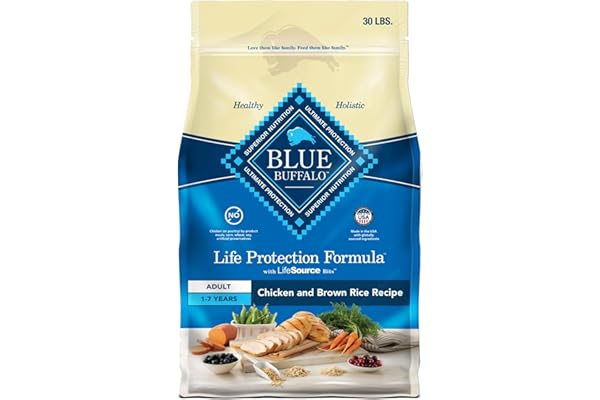
Blue Buffalo Life Protection Formula Adult Dry Dog Food, Chicken & Brown Rice, 30 lb

Editor's Choice
$67.98
26%Highest
adultBuy

Purina Pro Plan

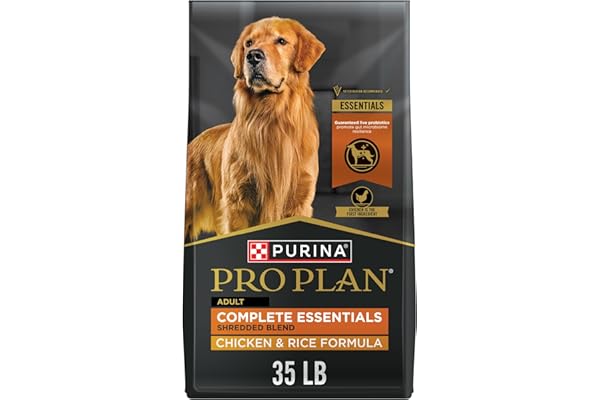
Purina Pro Plan Complete Essentials Shredded Blend Chicken and Rice Dog Food with Probiotics, 35 lb

Vet Recommended
$74.48
26%
adultBuy

Hill's Science Diet

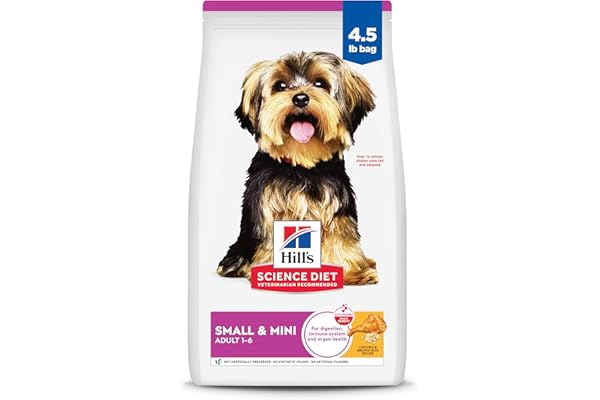
Hill's Science Diet Adult Small & Mini Dry Dog Food, Chicken & Brown Rice, 4.5 lb

Best for Small Breeds
Best
$23.99Lowest
22%
adultBuy

IAMS

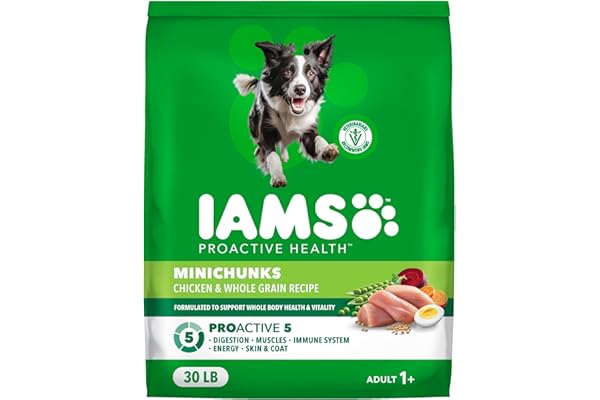
IAMS Proactive Health Adult Minichunks Premium Dry Dog Food, 30 lb

Best Value
$46.97
23%
adultBuy

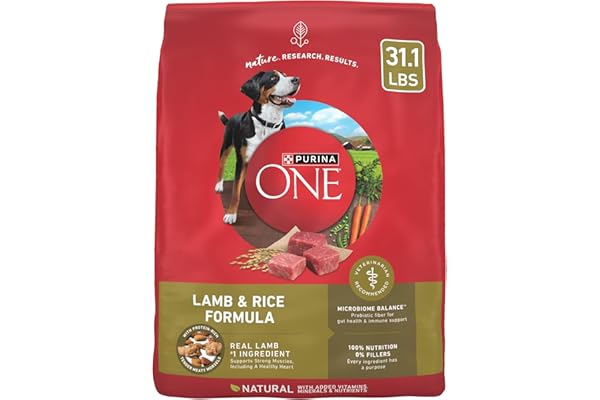
Purina ONE

Purina ONE Dry Dog Food Lamb and Rice Formula, 31.1 lb

Best for Sensitive Dogs
$48.98
26%
adultBuy

Our Top Picks for 2026

1. Blue Buffalo Life Protection Formula Adult Dry Dog Food, Chicken & Brown Rice, 30 lbTop Pick

Why we picked it

Pros

  • Real chicken as #1 ingredient
  • LifeSource Bits antioxidant blend
  • No corn, wheat, or soy
  • 28,000+ verified reviews

Cons

  • Premium price
  • Some dogs sensitive to peas

Best for

Check Price on Amazon

2. Purina Pro Plan Complete Essentials Shredded Blend Chicken and Rice Dog Food with Probiotics, 35 lbTop Pick

Why we picked it

Pros

  • #1 vet recommended brand
  • Live probiotics for digestive health
  • Shredded blend texture dogs love
  • Real chicken #1 ingredient

Cons

  • Premium price point
  • Large 35 lb bag only

Best for

Check Price on Amazon

3. Hill's Science Diet Adult Small & Mini Dry Dog Food, Chicken & Brown Rice, 4.5 lbTop Pick

Why we picked it

Pros

  • 4.8 stars — highest rated on Best Sellers list
  • Clinically proven nutrition
  • Small kibble size perfect for tiny mouths
  • Precise nutrient balance

Cons

  • Only available in small bag sizes
  • Higher cost per pound

Best for

Check Price on Amazon

4. IAMS Proactive Health Adult Minichunks Premium Dry Dog Food, 30 lbTop Pick

Why we picked it

Pros

  • 31,000+ reviews — most reviewed on list
  • Real chicken #1 ingredient
  • Excellent price per pound
  • Farm-raised chicken

Cons

  • Contains chicken by-product meal
  • Basic formula vs premium brands

Best for

Check Price on Amazon

5. Purina ONE Dry Dog Food Lamb and Rice Formula, 31.1 lbTop Pick

Purina ONE Dry Dog Food Lamb and Rice Formula, 31.1 lb product
5
Best for Sensitive Dogs

Purina ONE

Purina ONE Dry Dog Food Lamb and Rice Formula, 31.1 lb

Purina ONE Lamb & Rice is a top choice for dogs with chicken sensitivities. Real lamb as the first ingredient provides a novel protein source that most sensitive dogs tolerate well.

  • Real lamb as #1 ingredient
  • Novel protein for sensitive dogs
  • SmartBlend of natural ingredients
$48.98on Amazon
Check Price on Amazon

Why we picked it

Pros

  • Real lamb as #1 ingredient
  • Novel protein for sensitive dogs
  • SmartBlend of natural ingredients
  • No artificial flavors or preservatives

Cons

  • Contains corn
  • Not grain-free

Best for

Check Price on Amazon

How We Chose These Puppy Foods

We evaluated over 40 puppy food formulas using four core criteria specific to growth-stage nutrition. Each product was scored independently, and our editorial team consulted with veterinary nutritionists to verify our findings.

1

DHA & Essential Nutrients

DHA (docosahexaenoic acid) is the single most important nutrient unique to puppy food. We required meaningful DHA levels from fish oil or whole fish, along with ARA, vitamin E, and selenium for immune system development. Formulas relying solely on flaxseed omega-3s (ALA) were penalized, as dogs convert ALA to DHA very inefficiently.

2

Calcium & Phosphorus Balance

Calcium-to-phosphorus ratio is critical for skeletal development, and the ideal range is 1:1 to 2:1. We scrutinized whether formulas were appropriate for the breed sizes claimed — large breed puppy foods must deliberately limit calcium to prevent accelerated bone growth. Formulas with calcium above 1.8% dry matter for large breed claims were flagged.

3

AAFCO Compliance for Growth

Every pick must carry an AAFCO statement for "growth" or "all life stages." We heavily favor foods validated through actual feeding trials over those that rely solely on nutrient formulation — feeding trials prove bioavailability, not just paper compliance. Brands with decades of continuous feeding trial data (Purina, Hill's, Royal Canin) receive preference.

4

Value & Palatability

A puppy food is only as good as the puppy's willingness to eat it consistently. We analyze verified Amazon reviews for palatability patterns, especially among picky eaters and puppies transitioning from breeder diets. We also calculate cost per day of feeding — a $92 bag that lasts 60 days beats a $49 bag that lasts 20 days — and track pricing monthly.

Puppy Food Buying Guide

Puppy nutrition is more nuanced than adult dog nutrition. Here's everything you need to know to choose the right food for your puppy's breed size and life stage.

Small Breed vs. Large Breed Puppy Nutrition

Small Breed Puppies (Under 20 lbs adult weight)

Small breed puppies have faster metabolisms, higher surface-area-to-body-weight ratios, and smaller stomachs — they need calorie-dense food in smaller, more frequent meals. Look for kibble sized appropriately for tiny jaws, higher fat content to meet energy demands, and calcium levels calibrated for rapid but proportionate bone growth. Hypoglycemia is a real risk in toy breeds under 12 weeks, so consistent meal frequency is essential.

Large & Giant Breed Puppies (Over 55 lbs adult weight)

Large breed puppies are uniquely vulnerable to developmental orthopedic disease if they grow too fast. Lower caloric density, restricted calcium (1.0-1.5% dry matter), and a tightly controlled calcium-to-phosphorus ratio slow growth to a safe pace. Never feed a large breed puppy a standard puppy formula or an "all life stages" food not specifically approved for large breed growth — the excess calcium can cause irreversible joint and bone damage. Larger kibble size also encourages chewing and slows intake.

Why DHA Matters for Puppies

DHA (docosahexaenoic acid) is an omega-3 fatty acid that is the primary structural component of the brain and retina. During the first year of life — when a puppy's brain is undergoing rapid neural development — adequate DHA intake has been shown in peer-reviewed studies to improve trainability, cognitive function, and visual acuity compared to puppies fed DHA-deficient diets.

The effect is not trivial: research published in the Journal of the American Veterinary Medical Association found that puppies fed DHA-enriched diets performed significantly better on cognitive and psychomotor tests. This developmental window cannot be recovered — DHA deficiency during puppyhood has lasting neurological consequences.

Look for DHA sourced from fish oil or whole fish. Flaxseed, canola oil, and other plant omega-3 sources provide ALA, which dogs convert to DHA at very low efficiency (under 5%). A food that lists flaxseed as its only omega-3 source is not providing meaningful DHA for brain development.

Understanding Calcium-to-Phosphorus Ratios

Puppy SizeIdeal Calcium (DM)Ca:P Ratio
Small / Toy Breed1.2 – 1.8%1.2:1 to 1.8:1
Medium Breed1.2 – 1.8%1.2:1 to 1.8:1
Large / Giant Breed1.0 – 1.5%1.1:1 to 1.5:1

Calcium supports bone mineralization; phosphorus supports bone structure and cellular function. Both excesses and deficiencies cause problems: too little calcium produces rickets and pathological fractures, while too much in large breed puppies produces osteochondrosis and hypertrophic osteodystrophy. The ratio matters as much as the absolute level — calcium and phosphorus compete for the same absorption pathways.

When to Switch from Puppy Food to Adult Food

The transition timeline is driven by skeletal maturity, not calendar age. Small and toy breeds reach skeletal maturity at 9-12 months; medium breeds at 12-14 months; large breeds at 14-18 months; and giant breeds (Great Danes, Mastiffs, Saint Bernards) may not be fully mature until 18-24 months.

Switching too early deprives a still-growing puppy of the elevated protein, DHA, and mineral levels their development requires. Switching too late in small breeds can contribute to weight gain, as puppy foods are more calorie-dense than adult maintenance formulas. When in doubt, ask your veterinarian — they can evaluate your puppy's growth plates and body condition score to give you a precise transition date.

How Much to Feed Your Puppy

Puppy feeding amounts change significantly as they grow. Always start with the feeding guide on the specific bag you purchase — caloric density varies considerably between brands — and adjust based on your puppy's body condition. You should be able to feel your puppy's ribs without pressing hard, but not see them prominently.

General daily feeding guidelines by age and size:

  • 8-12 weeks, under 10 lbs adult: 1/4 to 1/2 cup per day, 3-4 meals
  • 8-12 weeks, 10-25 lbs adult: 1/2 to 3/4 cup per day, 3-4 meals
  • 3-6 months, small breeds: 1/2 to 1 cup per day, 3 meals
  • 3-6 months, medium breeds: 3/4 to 1 1/2 cups per day, 3 meals
  • 3-6 months, large breeds: 1 1/2 to 2 1/2 cups per day, 3 meals
  • 6-12 months, small breeds: 1/2 to 1 cup per day, 2 meals
  • 6-12 months, medium breeds: 1 to 2 cups per day, 2 meals
  • 6-18 months, large breeds: 2 to 3 1/2 cups per day, 2 meals

These are estimates only. Monitor your puppy's weight weekly for the first three months and monthly thereafter. Rapid weight gain in large breed puppies is a warning sign — controlled growth is the goal, not maximum growth rate.

Frequently Asked Questions

The timing depends on your dog's breed size. Small and toy breeds (under 20 lbs adult weight) typically mature by 9-12 months and can transition to adult food at that point. Medium breeds (20-55 lbs) are generally ready between 12-14 months. Large breeds (55-90 lbs) should stay on puppy food until 14-18 months, and giant breeds (90+ lbs) may need puppy food until 18-24 months because their bones take longer to fully develop. Switching too early can deprive a still-growing dog of critical nutrients; switching too late in small breeds can contribute to excess weight gain. When in doubt, ask your vet — they can assess your puppy's growth plate closure and body condition to give you a precise timeline.
In most cases, no — at least not as a sole diet. Adult dog foods are formulated to meet maintenance requirements, not the elevated demands of growth. Puppy foods contain higher levels of protein, fat, calcium, phosphorus, and DHA to fuel rapid muscle development, bone mineralization, and brain development. Feeding adult food exclusively to a puppy can result in slower growth, weaker bones, and neurological deficits during a developmental window that cannot be recovered. The one exception is foods labeled "for all life stages" — these meet the more stringent puppy AAFCO nutritional profiles and are safe for puppies. However, for large breed puppies, "all life stages" foods can sometimes deliver excess calcium that accelerates bone growth too quickly, so a large-breed-specific puppy formula is still preferred.
Feeding frequency should match your puppy's age and ability to regulate blood sugar. Puppies 8-12 weeks old should eat 3-4 times per day because their small stomachs cannot hold enough food in one or two sittings to sustain stable blood glucose — hypoglycemia is a real risk in very young puppies, especially small breeds. From 3-6 months, 3 meals per day works well for most breeds. From 6 months onward, most puppies can transition to 2 meals per day, which is the schedule most adult dogs maintain for life. Free feeding (leaving food out all day) is not recommended for puppies because it makes it impossible to monitor intake, can cause overfeeding, and undermines house training.
Yes — and this is one of the most important distinctions in puppy nutrition. Large and giant breed puppies (expected adult weight over 55 lbs) are uniquely vulnerable to developmental orthopedic diseases like hip dysplasia, osteochondrosis, and hypertrophic osteodystrophy if they grow too fast. The key driver is the calcium-to-phosphorus ratio and total calcium intake. Excess calcium in a large breed puppy's diet overstimulates bone growth, causing the skeletal system to develop faster than the supporting structures can handle. Large breed puppy foods deliberately limit calcium (typically 1.0-1.5% dry matter vs. 1.5-2.0% in standard puppy foods) and moderate caloric density to encourage steady, controlled growth. Do not feed a standard puppy food or an "all life stages" food to a large breed puppy unless the label specifically says it is appropriate for large breed growth.
The evidence is nuanced. Between 2018 and 2022, the FDA investigated a potential link between grain-free diets and dilated cardiomyopathy (DCM) — a serious heart condition — in dogs. While no definitive causal mechanism was established, the investigation flagged that many grain-free foods use high levels of legumes (peas, lentils, chickpeas) as substitutes for grains, and these may interfere with taurine absorption in ways that are still being studied. For puppies, whose cardiovascular systems are still developing, most veterinary nutritionists recommend erring on the side of caution and choosing a grain-inclusive puppy food — particularly one with a long feeding trial history. Grains like brown rice and oatmeal are highly digestible and provide valuable fiber; there is no evidence that healthy puppies benefit from avoiding them. If a grain allergy is confirmed by allergy testing (not just a dietary trial), a veterinary-supervised grain-free formula is appropriate.

Final Verdict

After evaluating 40+ puppy food formulas across ingredient quality, DHA sourcing, calcium-to-phosphorus ratios, AAFCO compliance, and real-world owner feedback, we keep coming back to Purina Pro Plan Puppy Chicken & Rice as the best puppy food for most breeds. It delivers real chicken nutrition, fish-oil-sourced DHA for brain and vision development, live probiotics for the developing gut, and full AAFCO feeding trial validation — at a price that most puppy owners can sustain through the entire growth period without financial strain.

If your priority is veterinary credibility and clinical validation above all else, Hill's Science Diet Puppy is the choice your vet is most likely to endorse. Its decades of feeding trial data and PhD-formulated nutrient ratios make it the safest evidence-backed option for puppies with sensitive stomachs or specific developmental needs.

For budget-conscious owners who refuse to compromise on ingredient quality, Wellness Complete Health Puppy delivers dual-protein nutrition with clean ingredients at the most accessible price on our list. And for owners committed to premium ingredients from day one, ORIJEN Puppy remains in a class of its own — though its price reflects that position.

The best puppy food is ultimately the one your puppy thrives on: consistent energy, firm stools, healthy weight gain, a shiny coat, and a curious, engaged temperament. If your current food delivers all of those, you have found your winner.